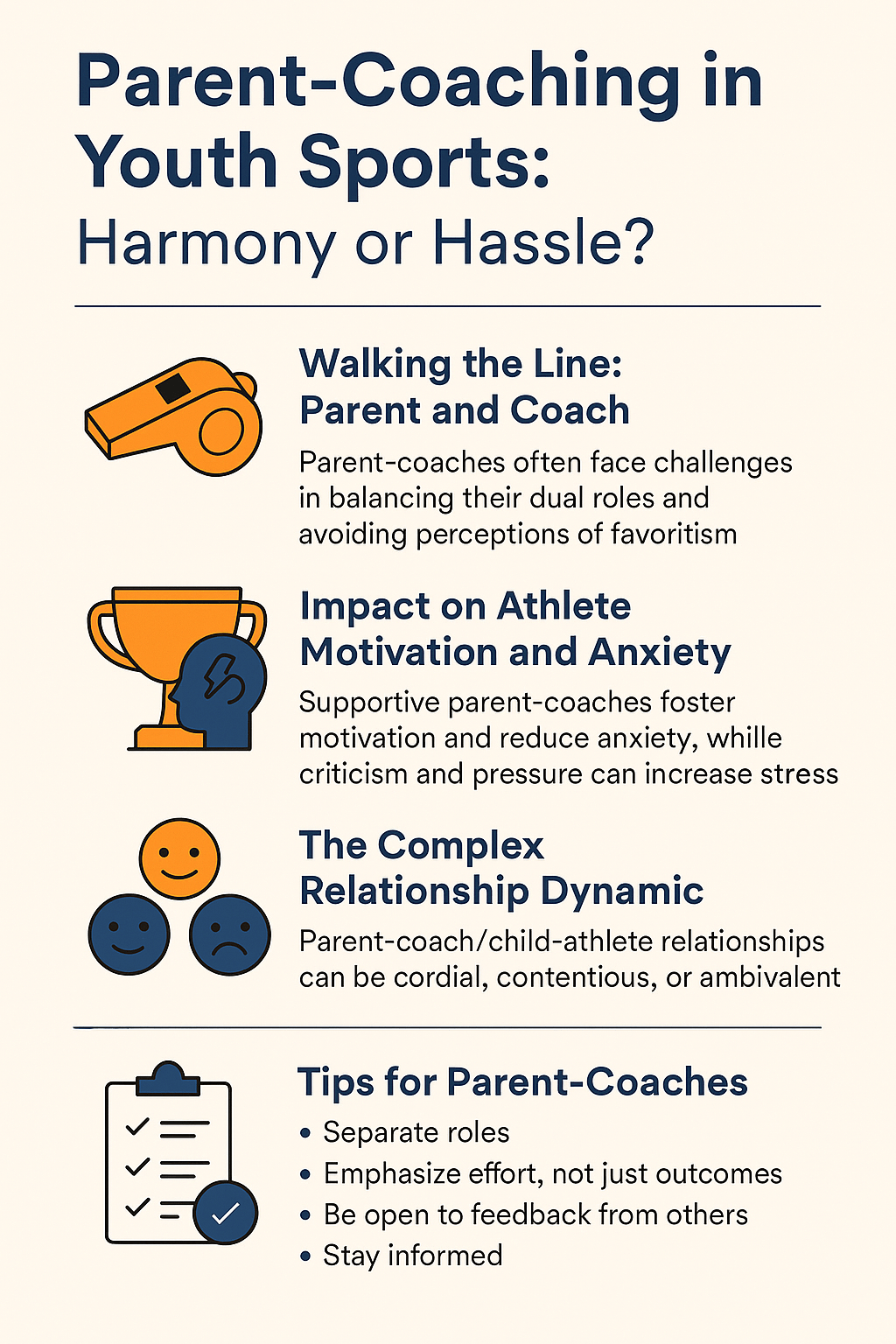
Parent-coaches are a common presence in youth sports. While their involvement often stems from good intentions—supporting their children and contributing to the team—this dual role can blur boundaries and create unique challenges. Drawing on research from Brown (1998), Barber et al. (1999), and Weiss & Fretwell (2005), this post explores the benefits, drawbacks, and psychological dynamics of being a parent and a coach simultaneously.
1. Walking the Line: Parent and Coach
According to Brown (1998), parent-coaches often face a delicate balancing act between their responsibilities to their child and to the team. Coaching one’s own child can lead to perceptions of favoritism or unfairness, even when none exists. Brown notes that other parents may scrutinize decisions more critically, and children can feel added pressure to perform.
Yet, when handled with care, this dynamic can be a source of great harmony. Positive communication, clear expectations, and an understanding of role separation—knowing when to be “coach” and when to be “parent”—are key to reducing conflict.
2. Impact on Athlete Motivation and Anxiety
The influence of parent-coaches on youth athletes goes beyond the playing field. In a study by Barber, Sukhi, and White (1999), researchers found that children coached by their own parents reported varying levels of motivation and competitive anxiety. When parent-coaches were perceived as supportive and focused on mastery rather than winning, athletes were more likely to feel motivated and experience less anxiety.
However, when emphasis was placed on performance outcomes or when the child felt criticized, stress levels increased. This highlights the importance of emotional intelligence and coaching style—parents must be aware of how their feedback and behavior affect their child’s psychological well-being.
3. The Complex Relationship Dynamic
Weiss and Fretwell (2005) offer a nuanced view of the parent-coach/child-athlete relationship. They identify three potential dynamics: cordial, contentious, and conundrum. In cordial relationships, open communication, mutual respect, and shared goals contribute to a positive experience. Contentious relationships, however, are marked by conflict, misunderstandings, and emotional strain, often exacerbated by mismatched expectations.
The “conundrum” describes the ambiguous middle ground where both positives and negatives coexist, creating uncertainty for both parent and child. The authors emphasize that this relationship is not static and can shift over time depending on external pressures, team dynamics, and personal development.
Conclusion: Striking the Right Balance
Parent-coaching can be a rewarding experience when approached thoughtfully. The research is clear: success in this dual role depends on communication, role clarity, and a focus on personal growth over performance outcomes. For parent-coaches, reflecting on your own motivations and maintaining an open dialogue with your child can transform potential pitfalls into a foundation for growth—on and off the field.
Tips for Parent-Coaches:
- Separate roles: Establish “coach time” and “parent time” to avoid overlap.
- Emphasize effort, not just outcomes.
- Be open to feedback—from your child, other coaches, and parents.
- Stay informed: Read research and attend coaching workshops to enhance your skills.


Leave a Reply