As spring arrives, many young hockey players and their parents face a familiar question: Should I play spring hockey? While more ice time might seem beneficial, the answer isn’t straightforward. The impact of spring hockey on player development depends on several factors, including coaching quality, season structure, and the player’s long-term goals.
Let’s delve into the key considerations.
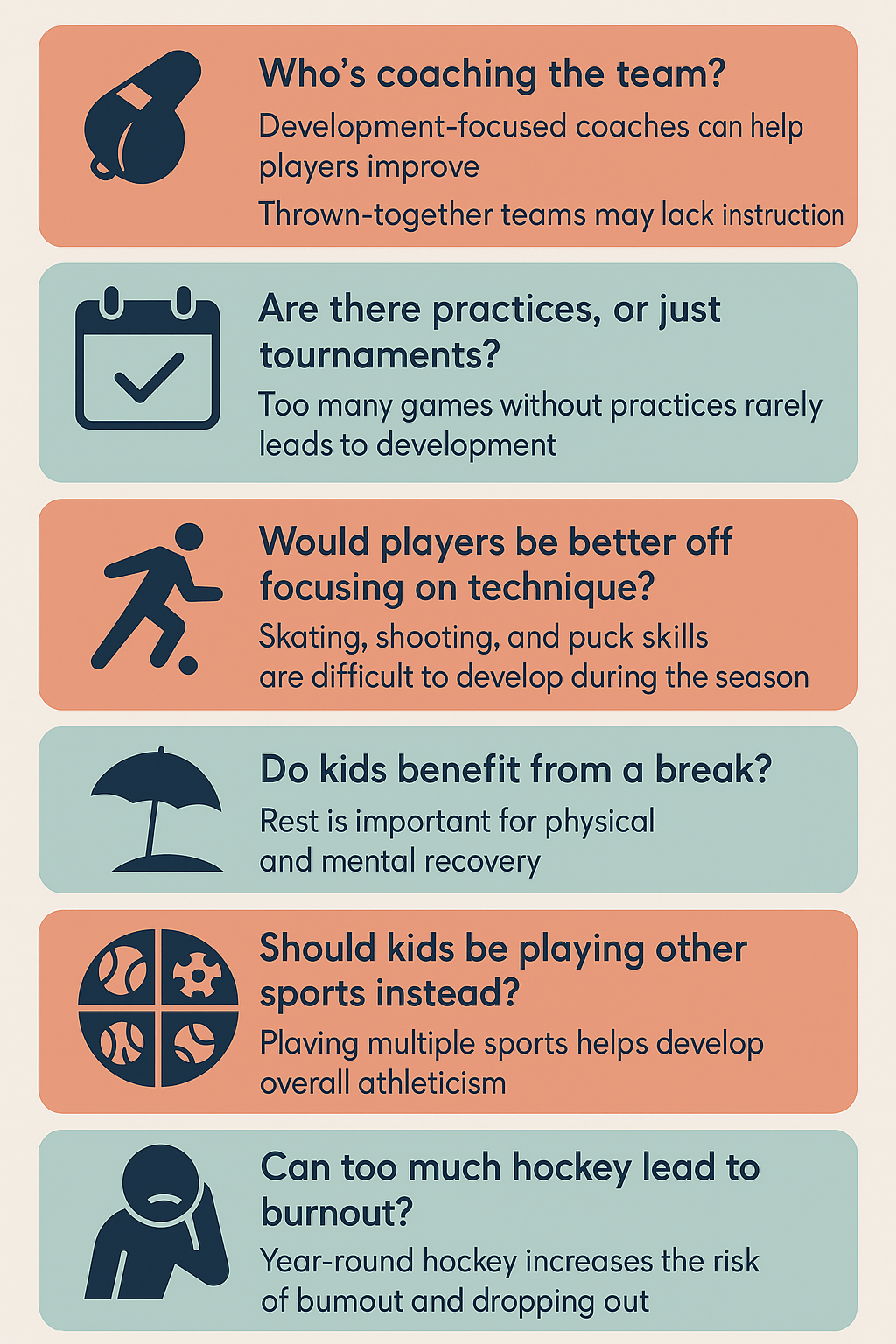
1. Who’s Coaching the Team?
Coaching quality matters. A spring team led by development-focused coaches can significantly aid a player’s growth. Conversely, teams hastily assembled for tournaments may prioritize winning over skill development, offering limited instructional value.
2. Are There Practices, or Just Tournaments?
Many spring programs emphasize weekend tournaments, often at the expense of regular practices. While games are enjoyable, they rarely foster long-term development without structured practice sessions. A balanced approach, ideally with multiple practices per tourney, is essential for skill enhancement.
3. Would Players Be Better Off Focusing on Technique?
For most young players, the off-season is an ideal time to refine skills like skating, shooting, puck handling, and positional understanding. These aspects are challenging to develop during a game-heavy summer. Engaging in small-group sessions with qualified skills coaches or attending focused development camps can be more beneficial than participating in numerous tournaments.
4. Do Kids Benefit from a Break?
Physical and mental breaks are crucial. Playing hockey year-round can lead to overuse injuries and mental fatigue. Allowing kids 4–8 weeks off the ice annually helps them rest, recharge, and return to the sport with renewed motivation. You must recognize the needs of your child and act appropriately.
5. Should Kids Be Playing Other Sports Instead?
Participating in other sports builds overall athleticism, balance, coordination, and competitiveness. Studies indicate that multi-sport athletes have lower injury rates and greater long-term success than those who specialize early. High-level teams increasingly value athletes with diverse sports backgrounds.
6. Can Too Much Hockey Lead to Burnout?
Overtraining and constant pressure can diminish the joy of the game. When young athletes are perpetually engaged without adequate rest or exploration of other interests, they risk mental burnout and may even quit the sport. Be sure that any off-season hockey is led by the enthusiasm of the child, not the hopes and dreams of the parent. Both Hockey Canada and USA Hockey recommend limiting structured hockey activities to mitigate these risks.
7. Did Today’s Pros Play Spring Hockey?
Some did, but many did not. Numerous NHL players attribute their development to informal games, backyard rinks, and off-ice training rather than organized spring leagues. Few engaged in tournament hockey year-round. Instead, they honed their skills in relaxed, focused settings. The emphasis was on deliberate practice and play-based learning, not sheer volume.
8. Is More Always Better When It Comes to Training?
Young athletes benefit more from quality over quantity. Especially once a player gets to a certain level of skill, more ice time does not equal stronger play. A balanced off-season plan that includes rest, focused skill work, cross-training, and enjoyment is more effective than constant competition.
The Bottom Line
Spring hockey can aid young players—if it’s approached correctly. However, many might benefit more from rest, technical training, or engaging in other sports. You need to know the needs of your player and not get stuck on the rat race of FOMO and the pressure of what you see other kids doing on Instagram. Development is not a sprint. The most successful players aren’t those who played the most but those who trained with purpose, played with joy, and developed as well-rounded athletes.
References
- Overtraining and burnout in young athletes: UPMC HealthBeatUPMC HealthBeat
- Early specialization and year-round training in youth hockey: XL AthleteXL Athlete
- Balancing rest and training for peak performance: King Cobras HockeyKing Cobras Hockey
- Investigating the impact of youth hockey specialization on mental health: SCAPPS JournalSCApps
- Burnout in youth sport: Human Kinetics CanadaHuman Kinetics Canada+1Coaches Ontario+1
 GRIT Hockey
Leave a comment